- Implemented since: 2014
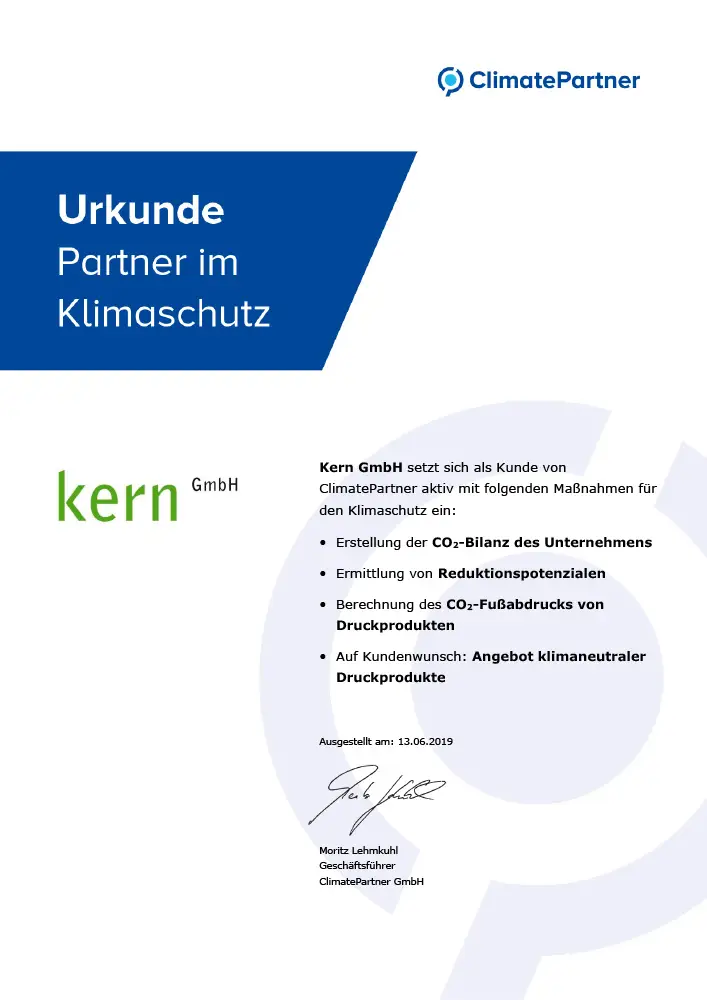
- Creation of the company's CO₂ balance
- Identification of reduction potentials
- Calculation of the Carbon Footprint of printed products
- Financial climate contribution upon customer request
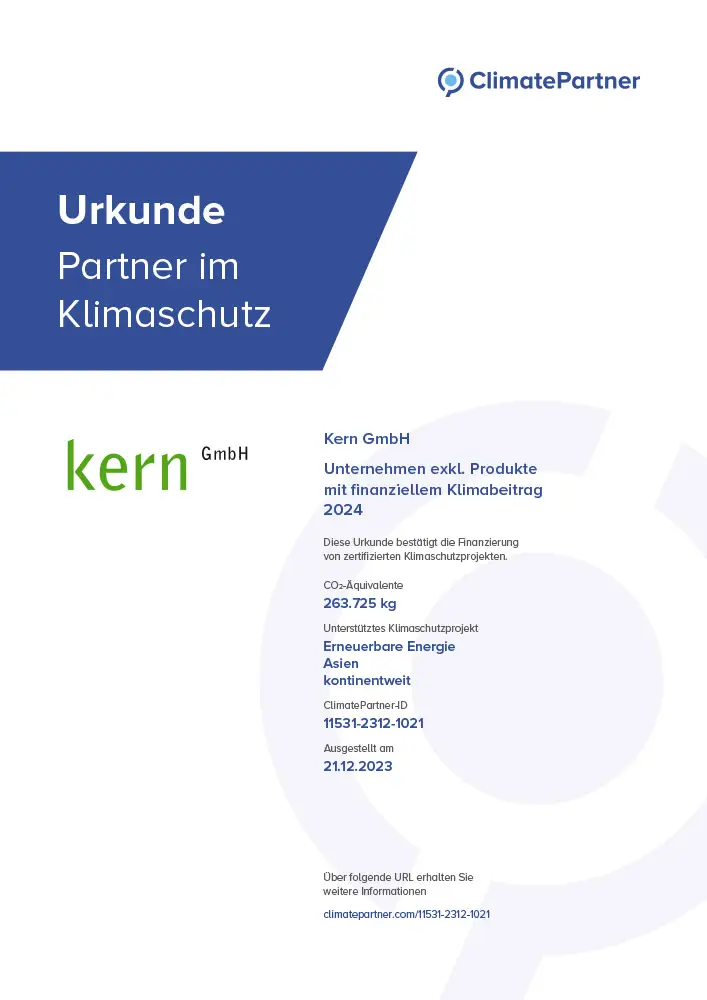
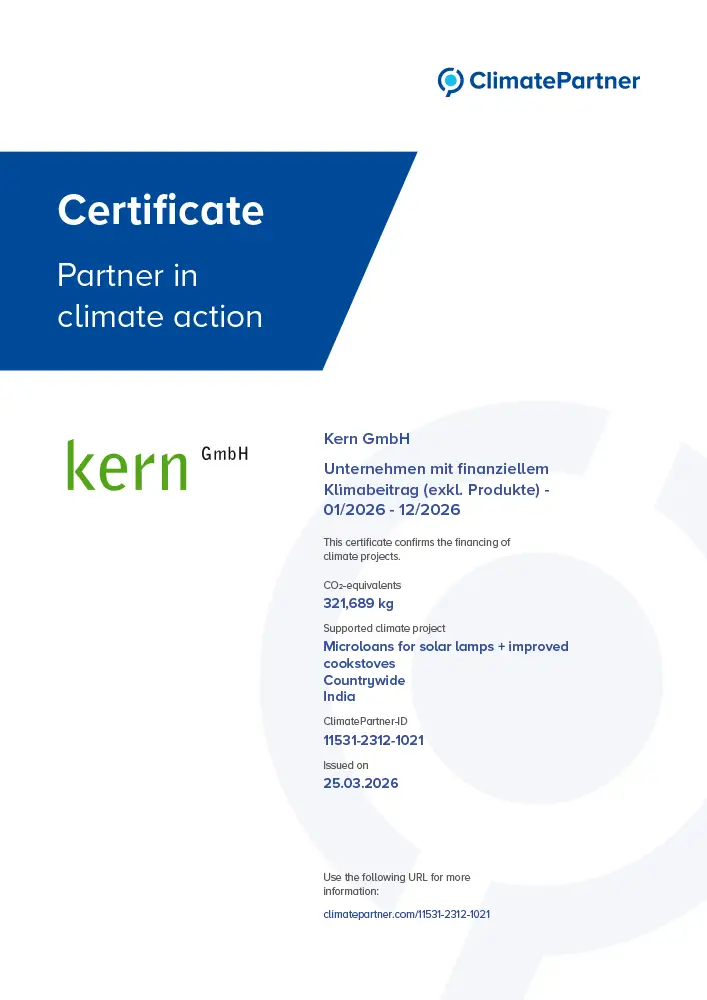
- Since 2024, climate contribution applied to all non-product-related processes
Climate change is one of the greatest societal challenges of our time. As a paper-processing company, we must also confront this challenge and be aware of our responsibility. In 2023, we set the goal of achieving "climate-neutral" production by 2035. Since achieving full climate neutrality is practically impossible, we have further developed and refined this goal. Through our business operations, we aim to achieve the highest possible climate compatibility. To this end, we focus on three core aspects:
- Calculating CO₂ emissions
- Avoiding and reducing greenhouse gas emissions
- Financing certified climate protection projects
Together with ClimatePartner, we calculate the CO₂ emissions of our printed products and processes. From this, a so-called carbon footprint is created.
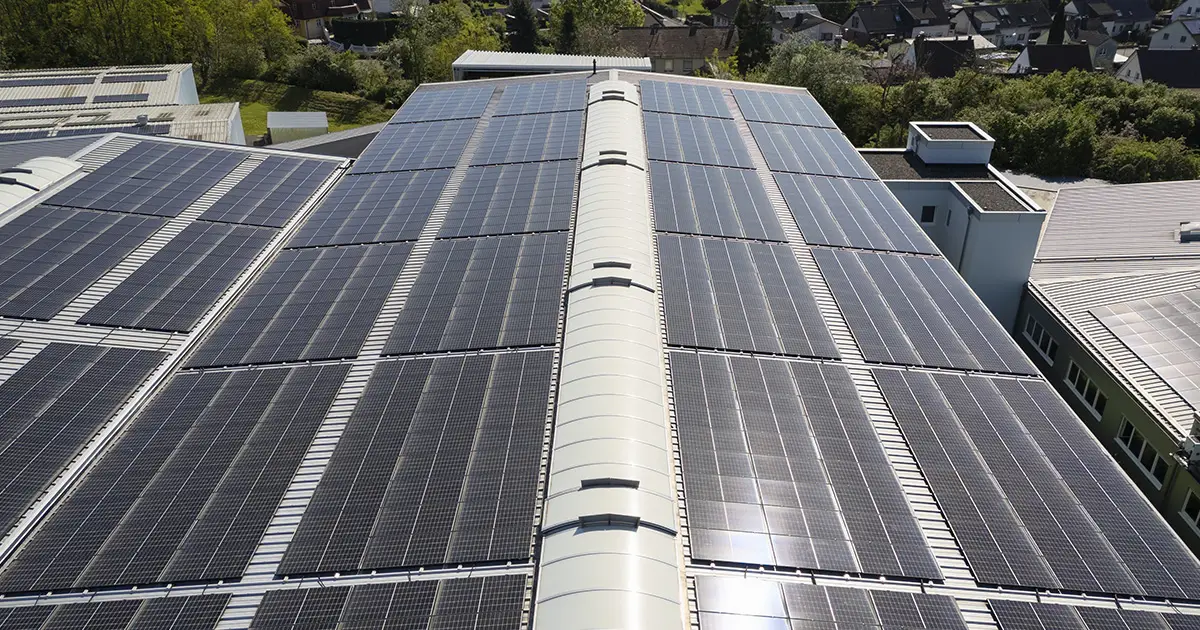
Where technically and economically possible, we avoid or reduce the generation of greenhouse gases. For example, we source 100 % of our electricity from a renewable energy mix. Part of this electricity is generated directly on our production halls via a photovoltaic system. Measures to improve heating performance, such as switching to energy-efficient heat pumps in office areas instead of a gas-fired heating system, or the installation of high-speed doors to prevent heat loss in production halls, actively contribute to reducing our carbon footprint. The acquisition of new machinery and the development of production processes always take effective energy management into account. The lighting in our facilities has been switched to LED technology, and our vehicle fleet is gradually being converted to electric mobility.
Unavoidable greenhouse gas emissions
CO₂ emissions that are unavoidable despite these efforts are compensated through transparent and verifiable financing of certified carbon offset projects. These can include reforestation measures or the construction of renewable energy plants such as wind, solar, hydroelectric, and biogas facilities.
The projects must meet internationally recognized standards and are verified according to strict criteria, such as the Gold Standard or the Verified Carbon Standard (VCS). One of the most important requirements is that the projects represent genuinely additional climate protection measures and that their contribution to CO₂ reduction is measurable.
Only projects that rely on additional financial resources can be certified (principle of additionality). Double counting in the voluntary carbon market is prevented by issuing verified emission reductions through official registries with a unique ID. These requirements are regularly audited by independent third parties or validation and verification bodies (VVBs) such as TÜV, Aenor, or SCS Global Services.
With a financial climate contribution, our customers can compensate for the CO₂ emissions of their printed product. The independent "financial climate contribution" ("finanzieller Klimabeitrag") label enables consumers to trace this financing via a link or QR code with an individual order ID.
Financial climate contribution since 2024

Since 2024, a comprehensive CO₂ footprint has been calculated for all remaining operational processes not directly related to production, for which we contribute financially to climate protection. By financing projects such as renewable energy initiatives or microloans for solar lamps and cookstoves, a total of 1,090,374 kg CO₂ equivalents are offset (www.climatepartner.com/11531-2312-1021). This includes Scope 1 and Scope 2 emissions, as well as our share of Scope 3.
- Scope 1 includes all direct emissions, for example from company-owned facilities or vehicle fleets.
- Scope 2 covers emissions from purchased energy, such as electricity.
- Scope 3 includes all other emissions not under the company’s direct control, such as employee commuting or business travel in personal cars.
Related links
- Information about ClimatePartner
https://www.climatepartner.com/en