- Perfect for you if you are creative but more of a skilled craftsman than an artist, enjoy working with people, and like working on a computer in an office environment.
- Probably not for you if you prefer working alone, avoid direct contact with clients, or just want to do “something with media".
Like a funnel, the different elements of a media product come together in media design: manuscripts from copywriters, product images from photographers, and graphics from illustrators. Digital and print media designers combine these into a coherent composition. They must also be able to independently create these individual components when necessary. They require marketing knowledge, communicate with clients, calculate and plan projects, and must develop skills in cross-media production—for example, converting printed brochures into digital documents for the web. HTML, databases, networking, audio and video editing, and cost planning are just as much part of the training program as typography, color management, printing, and post-press technologies.
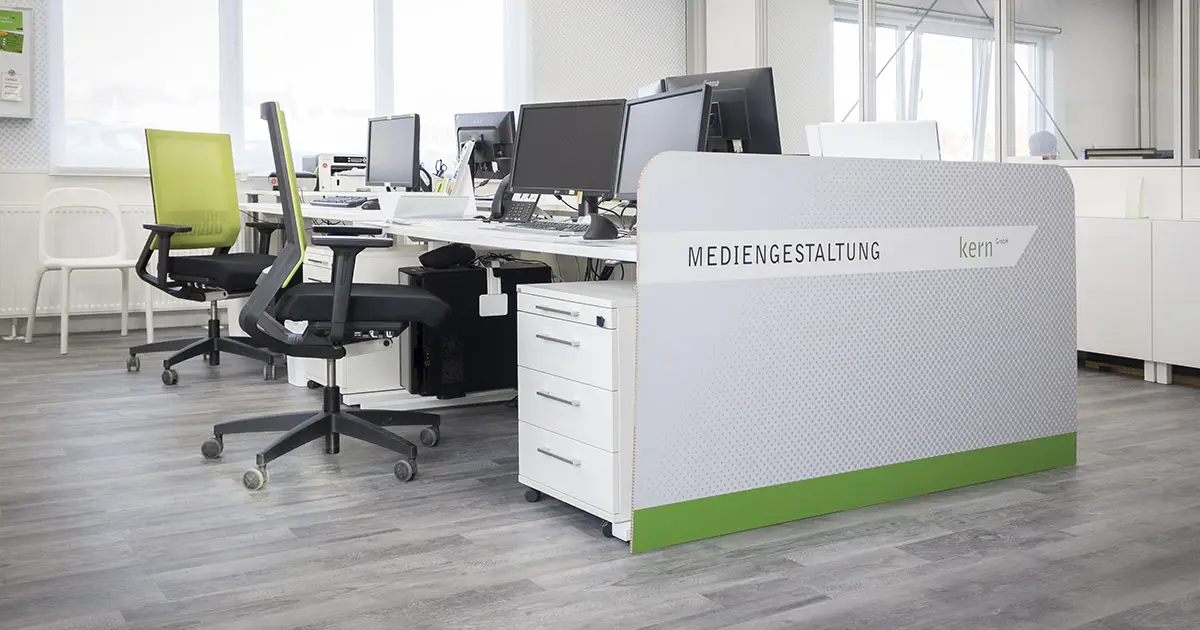
Despite all creative effort, the daily work in media design is less about art and more about craftsmanship—a craft primarily practiced on the computer. Design principles must be followed, corporate design guidelines adhered to, and client requirements coordinated. Communication can occur via email, phone, or directly on-site with clients.
The dual vocational training program usually lasts three years. From the third year onward, with a view to the intermediate and final examinations, the broad field of media design is divided into four specializations: Digital media, Print media, Project management, and Design conception.
The school-based part of the training takes place at the Technical and Vocational Training Center 2 (TGBBZ II) in Saarbrücken. Classes are conducted in blocks, typically following a cycle of one week at school and two weeks in the company. In the second year, an intermediate examination must be completed, which serves as a prerequisite for the final examination in the third year. The final examination consists of a written and a practical part. Part of the practical exam includes a multi-day conception phase, during which a media product is planned and designed according to the chosen specialization. Another part of the practical exam is conducted under the supervision of examiners.
The training program is generally accessible with a secondary school leaving certificate. Due to the complexity of the content, we recommend at least a good intermediate school diploma or a university of applied sciences entrance qualification.
Applicants should have a sense of aesthetics and design, a good eye for layout, form, and color, as well as technical understanding and holistic thinking. As technical literature is often only available in English, a basic reading comprehension is also necessary.
Specialization: Print media
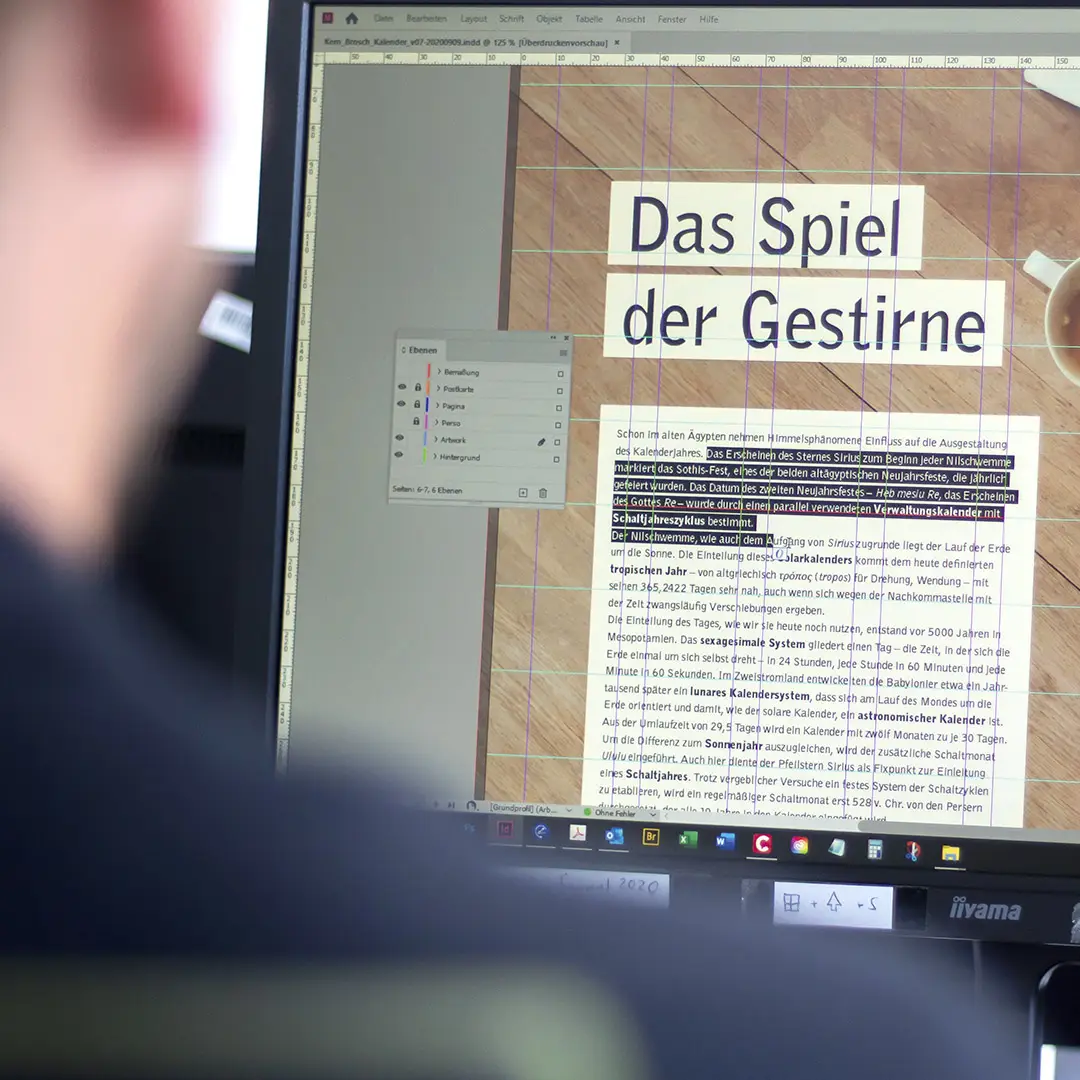
In the Print Media specialization, digital and print media designers plan production workflows and design media products. They edit photos, create graphics, and prepare data for printing on the computer. This work requires not only creativity but also precision and a good sense of form and color. In addition to design tasks, for example in an agency environment, digital and print media designers also work in printing companies in the so-called prepress stage. The main focus here is on checking and preparing print data, creating color-accurate proofs, and imposition—assembling individual digital pages into a print form, which is then exposed onto a printing plate. This requires spatial imagination and technical understanding, for example the relationship between substrate and color reproduction, as well as knowledge of printing and post-press techniques.
Specialization: Digital media
In the Digital Media specialization, digital and print media designers create graphics, animations, and websites—from layout and HTML coding to the integration, configuration, and maintenance of content management systems. This work requires a fundamental understanding of programming processes and good English skills.
Specialization: Project management
Digital and print media designers with a focus on Project Management primarily work in the commercial area, such as order management, client support, or cost calculation. They advise clients, prepare quotations, and plan projects within the respective time and budget framework. Since they are involved in acquisition, they are usually among the first points of contact for clients interacting with the company. A confident and friendly manner is essential.
Specialization: Design conception
The fourth specialization is Design Conception. Digital and print media designers focusing on this area develop concepts for media products such as magazines, advertising brochures, or websites. They assess the technical feasibility based on client requirements, conduct target group analyses, and apply quality assurance measures and control procedures. As with the other specializations, this role requires skills and knowledge that go beyond the core professional profile.
Media design at Kern
The scope of tasks for digital and print media designers at Kern is very broad. Everything is united under one roof—from classic prepress and an in-house print agency to digital media. This allows nearly all learning areas of the vocational training program to be covered. In addition, trainees gain comprehensive insights into areas related to the profession, such as marketing, sales, cost calculation, client support, printing using various methods, and complete post-press processing. At Kern GmbH, the two specializations offered are Print media and Project management.
Profile
- Specializations: Print media, digital media, project management, design conception
- Training type: Dual vocational training
- Duration: 3 years (can be shortened)
- Vocational school: TGBBZ II Saarbrücken
- School schedule: Block instruction (1 week at school, 2 weeks in the company)
- Examination regulations: Intermediate and final examinations with written and practical parts
- Apprenticeship remuneration: 1st year: €989, 2nd year: €1,032, 3rd year: €1,075
- Further training opportunities: Media specialist (Medienfachwirt*in)
- Recommended school leaving certificate: Good intermediate school diploma or technical/university entrance qualification