Company history
- Details
- Category: Company
Tradition meets innovation – companies with a long and eventful history must have started somewhere.
2025
- Details
- Category: Company history
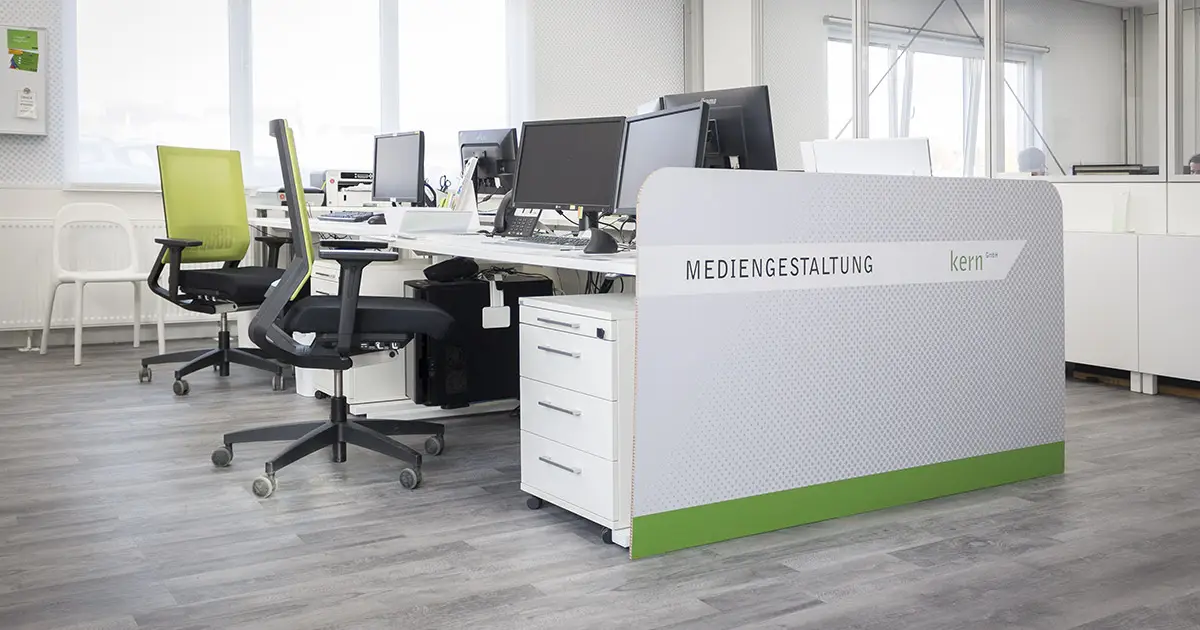
The head building of Hall 1 is being completely redesigned. Several individual offices will be consolidated into a modern open-plan office consolidating departments such as prepress, digital printing, and media design. A new meeting room and reception area will also be created on the lower level.

2024
- Details
- Category: Company history
The HP Latex 1500 introduces a 3.20-meter-wide roll printer into large-format printing. The water-based latex inks deliver excellent colour reproduction for print products intended for both indoor and outdoor applications.
2023
- Details
- Category: Company history
An external Kern office is established in Rostock, which strengthens the media production team in Bexbach with two graphic designers. However, following the departure of both employees, the office has to be closed again after just one year.
2022
- Details
- Category: Company history
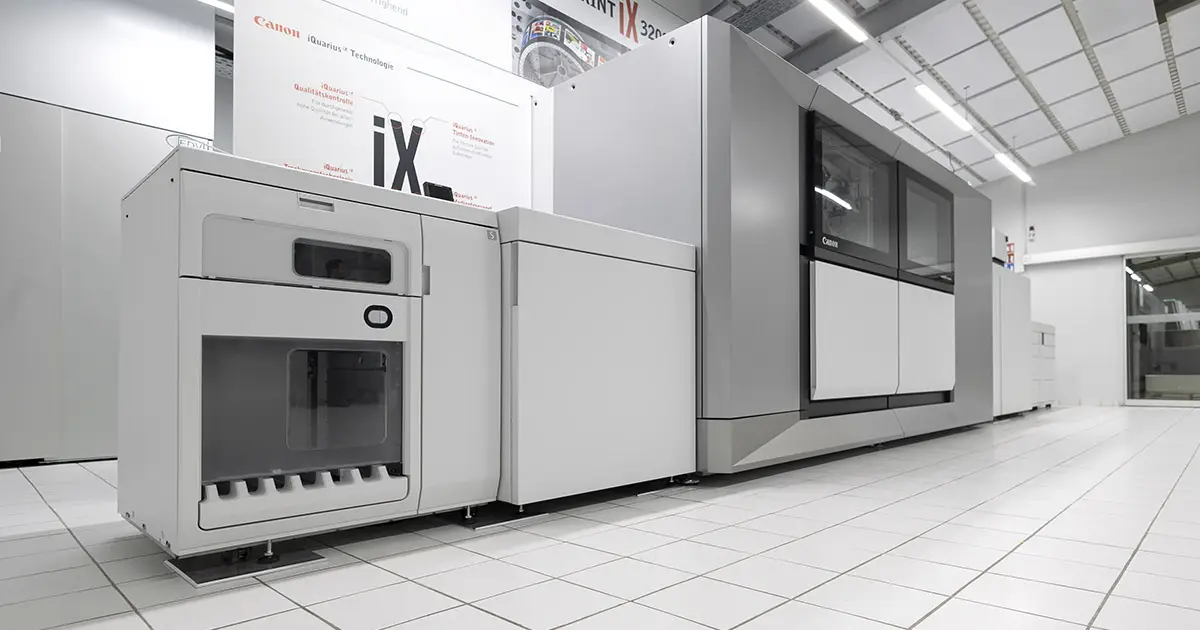
With the Canon varioPRINT iX3200, the previously toner-based colour digital printing on the Kodak NexPress SX3300 is replaced by a high-performance inkjet system. Large-format printing is further expanded with a second Epson SureColor SC-S80600 solvent roll printer.
2021
- Details
- Category: Company history
As a result of the COVID-19 pandemic and low print volumes, a gap has emerged in the recycling cycle for waste paper. The paper crisis, already becoming apparent due to changing consumer behaviour and the paper industry’s shift from graphic papers to packaging materials, is now fully taking effect. Availability on the paper market collapses, with delivery times increasing from just a few days to several months. Kern is able to bridge this period successfully thanks to a large paper warehouse in Hall 2 and additional temporary storage areas, keeping a wide range of paper stocks available.
2020
- Details
- Category: Company history
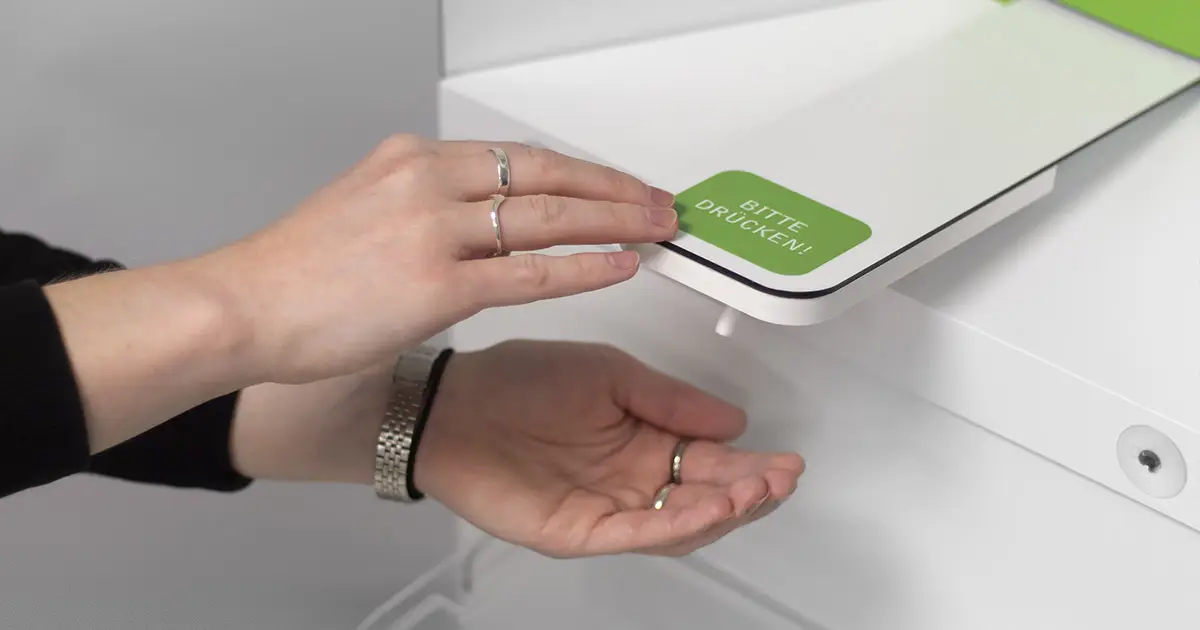
The COVID-19 pandemic hits all industries hard. Shops remain closed, trade fairs are cancelled, and cultural and sporting events no longer take place – the printing market collapses. The available capacity from offset printing, digital printing and print finishing is consolidated in large-format production, where disinfectant stands are manufactured continuously. In addition to purchased dispensers for individually printed displays made of aluminium composite material, a proprietary dispenser system is developed, which earns Kern the title “LFP Printer of the Year” at the Print & Media Awards.
2019
- Details
- Category: Company history
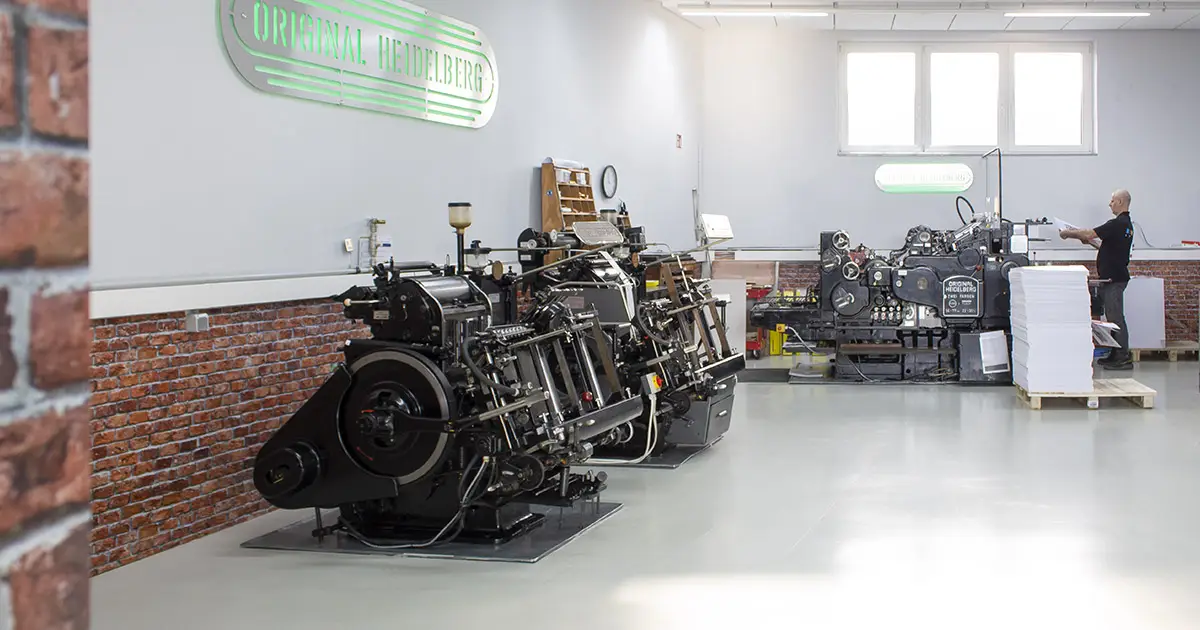
The letterpress department is relocated from the offset printing hall into a dedicated print finishing area in Hall 1. The Original Heidelberg Platen (OHT) is complemented by a second machine for hot foil stamping. An Original Heidelberg Cylinder Press (OHZ) is used for finishing processes such as die-cutting, creasing and perforating. Film lamination is also moved from digital printing into this area.
2018
- Details
- Category: Company history
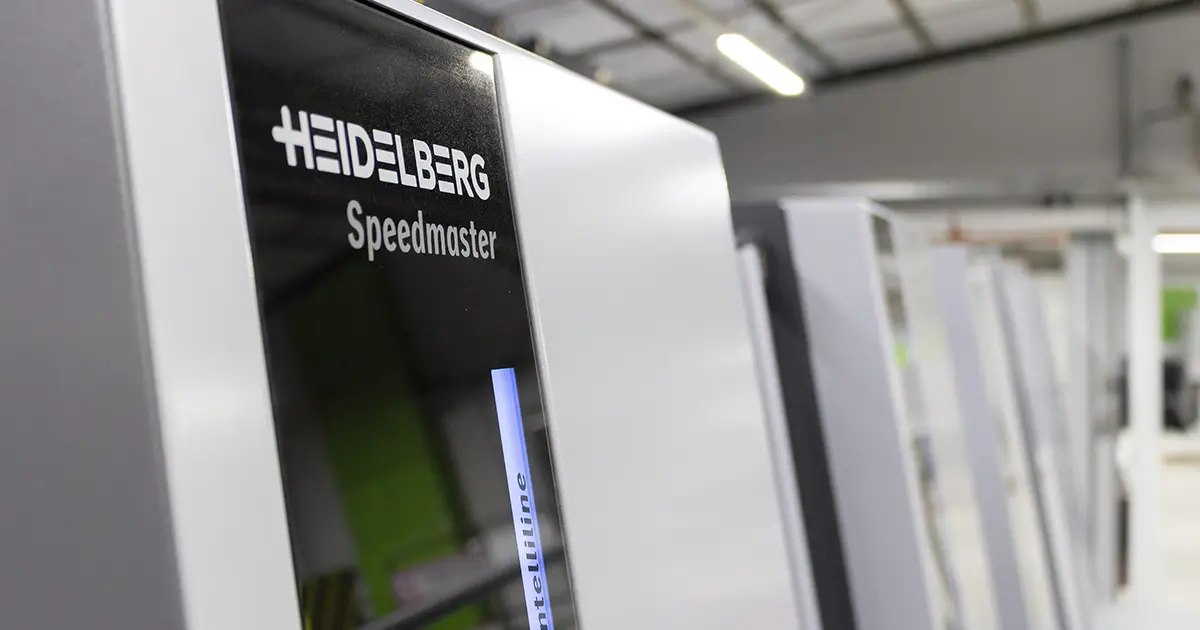
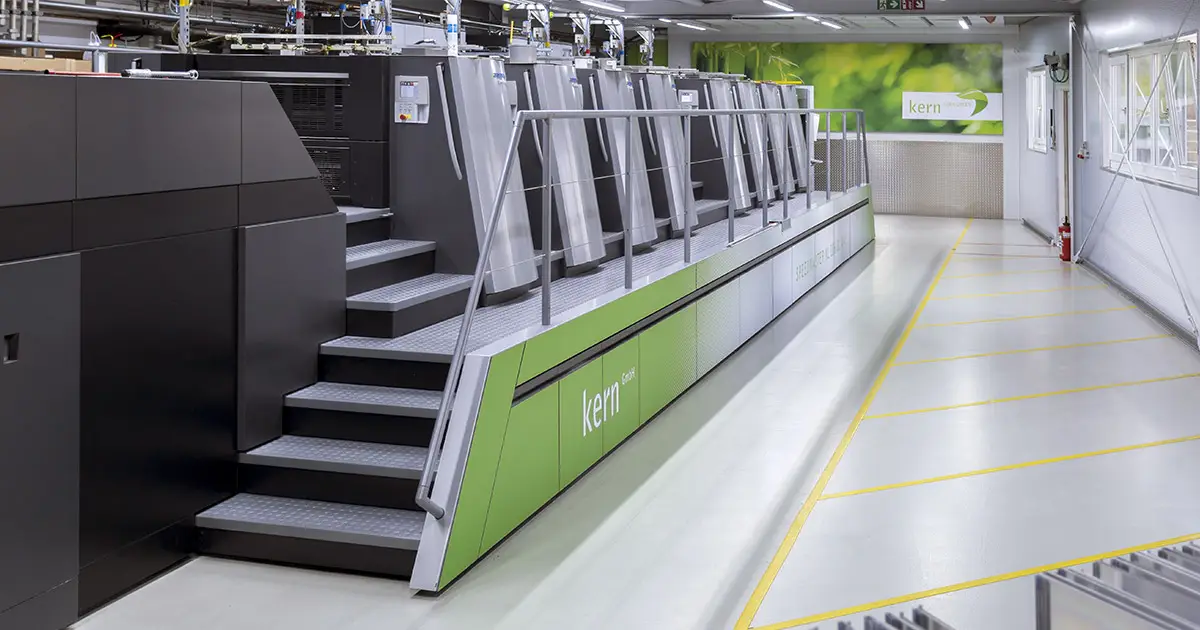
With the replacement of the eight-colour offset press in January—also by a machine from the XL 106 series—the renewal cycle in the press hall is now complete. The two new Speedmaster XL presses complement each other optimally: high-volume brochure printing is produced on the eight-colour press with fully automatic perfecting, while the five-colour press is used for covers with special colours, UV coating finishing, and inline processes such as perforating, die-cutting and creasing. This achieves peak performance in the printing process, particularly in catalogue and magazine production.
2017
- Details
- Category: Company history
The next step in the renewal cycle in March is the replacement of the Heidelberg Speedmaster CX 102 with an XL 106 5+L (UV coating) press. In addition to a higher throughput of up to 18,000 sheets per hour and a larger sheet format, which enables more efficient use of imposition schemes, the XL 106 also allows UV coating finishing to be performed in-house for the first time. Using the Push-to-Stop principle and fully automated plate changing, job changeovers are completed in just three minutes. Make-ready processes no longer need to be actively initiated by the operator but are started autonomously by the press.
2016
- Details
- Category: Company history
In summer, the entire technical workflow in offset printing is restructured. The existing Heidelberg Prinect environment is upgraded to the latest version and expanded with the Businessmanager management information system (MIS). This required extensive server upgrades.
2015
- Details
- Category: Company history
With the new Hall 2, large-format printing is expanded in autumn. The Durst Rho P10-160 UV printer can print directly onto rigid materials such as cardboard, wood, plastics, metal or plexiglass up to a thickness of 40 mm.
2014
- Details
- Category: Company history
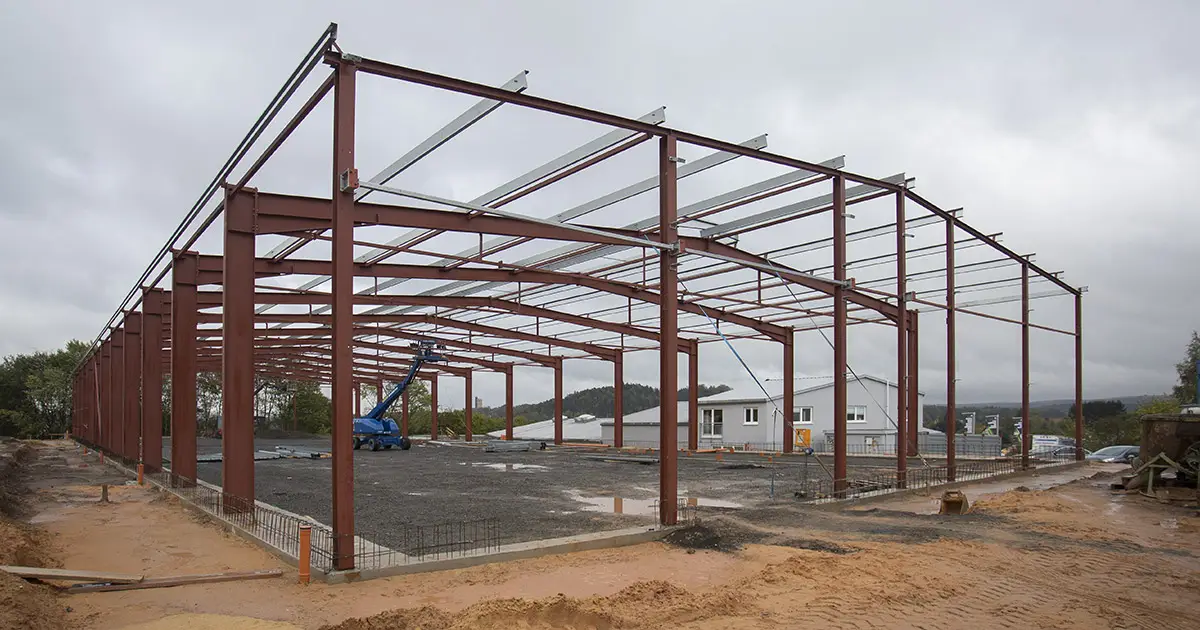
Construction of the new shipping and logistics centre begins in September. An adjacent plot of land is acquired to construct an initial hall of approximately 1,800 m².
2013
- Details
- Category: Company history
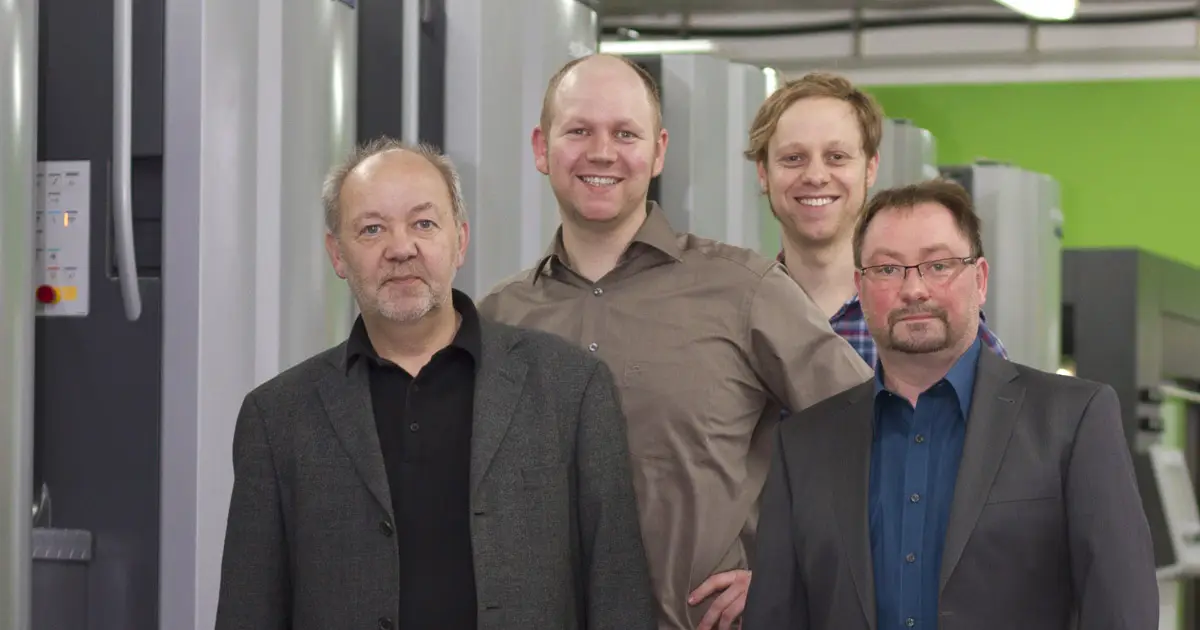
Holger Kern joins the management team alongside Jürgen and André Kern. He succeeds Joachim Kern, who retires from the management board at the end of the year.
2012
- Details
- Category: Company history
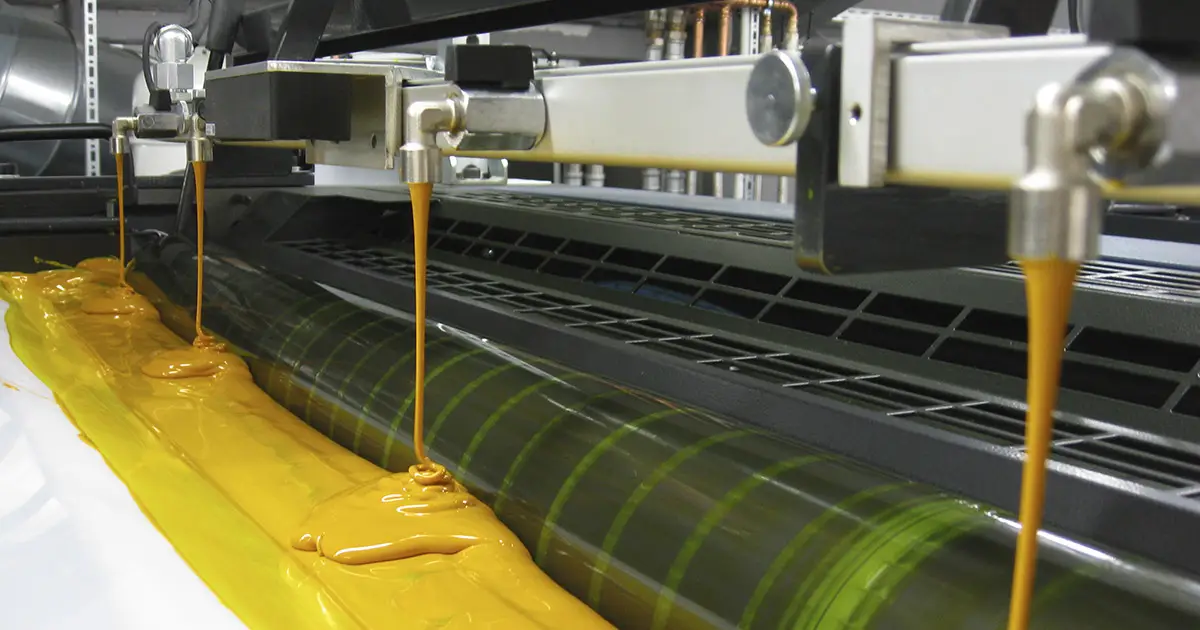
In February, the SM 102 8P in offset printing is replaced by the world’s first Heidelberg Speedmaster SX 102 8P. At Kern, the SX 102 undergoes a three-month field test operation before being officially presented to the public at Drupa in Düsseldorf in May.
2011
- Details
- Category: Company history
André Kern’s brother Holger Kern joins the company.
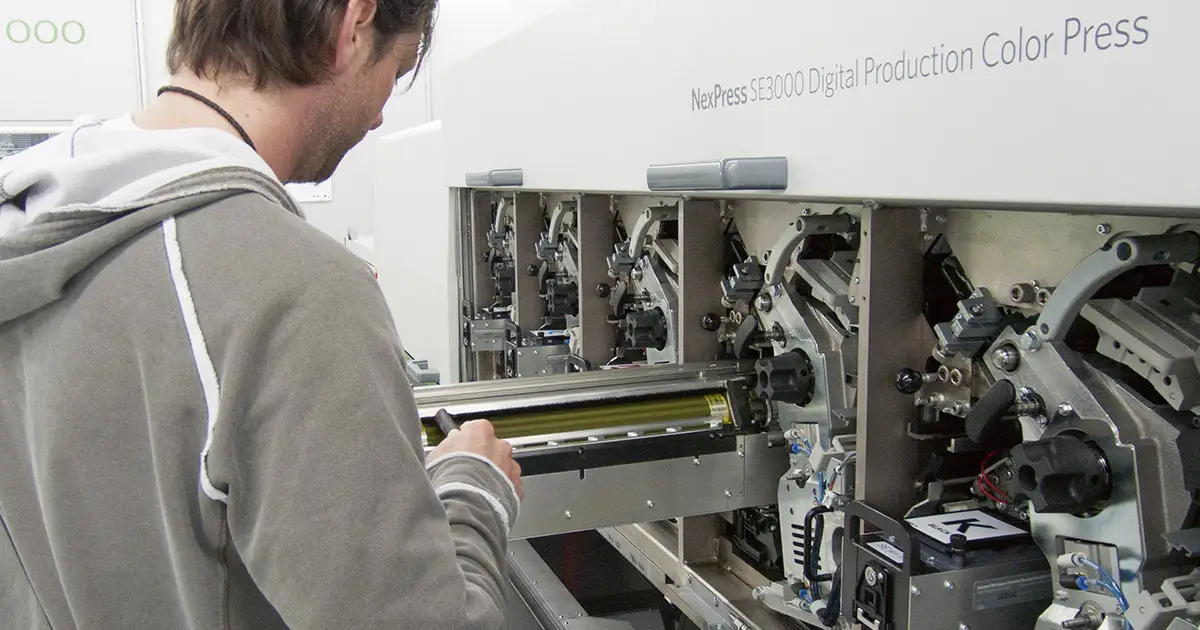
In March, certification according to PSO – Process Standard Offset Printing (ISO 12647) is successfully achieved for the first time. This ensures consistently high colour reproduction quality across the entire offset production chain, from data creation and processing through plate imaging to the printing process itself. Compliance with this standard is audited externally every two years.
2010
- Details
- Category: Company history
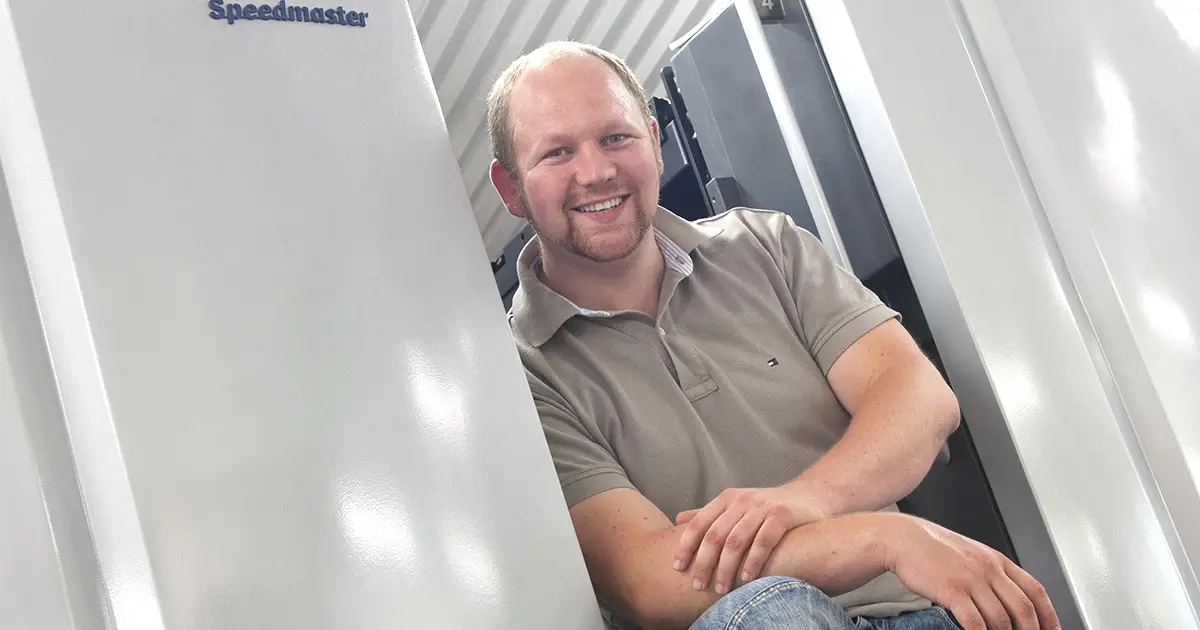
Kern presents three world firsts. After a three-month in-house field test phase, the first Heidelberg Speedmaster CX 102 5C offset printing press enters regular production. For mailing production, the in-house development Heidelberg Perfector Flexomailer has been installed. Featuring a globally unique sheet perfecting system in the 70 × 100 cm format and fully inline processing, it enables the production of self-mailers at unprecedented quality and speed. Personalisation is applied on both sides using six inkjet printheads of the Kodak Prosper S10 system in laser-print quality at a throughput of over 300 metres per minute. Kern GmbH thus operates the world’s first sheet-fed application of the Prosper S10 system.
2008
- Details
- Category: Company history
André Kern joins the management team alongside his father Jürgen Kern and his uncle Joachim Kern.
Printing plates are now exposed using a Heidelberg Suprasetter 105 SCL autoloader, capable of imaging up to 19 large plates per hour in 24-hour operation. The newly installed Heidelberg Image Control system ensures consistently high print quality on both the Speedmaster SM 102 6C and the new SM 102 8C presses.
2007
- Details
- Category: Company history
One-pass productivity has come into focus at Kern with the installation of the Heidelberg Speedmaster SM 102 6C. Since then, finishing steps such as die-cutting, perforating and creasing can be carried out in-line in the printing unit using die-cutting plates or Cito systems during the printing process. With the SM 102 6C, finishing effects such as spot varnish are also possible in large format for the first time—previously only achievable on the smaller-format Speedmaster SM 52 5C+LX.
2006
- Details
- Category: Company history
To meet the increasing quality demands of customers, the first six mailings and self-mailers are certified by Deutsche Post. The lettershop intensifies its cooperation with the postal service, so that Kern GmbH has officially been part of Deutsche Post’s Performance Partner program since 2006.
2005
- Details
- Category: Company history
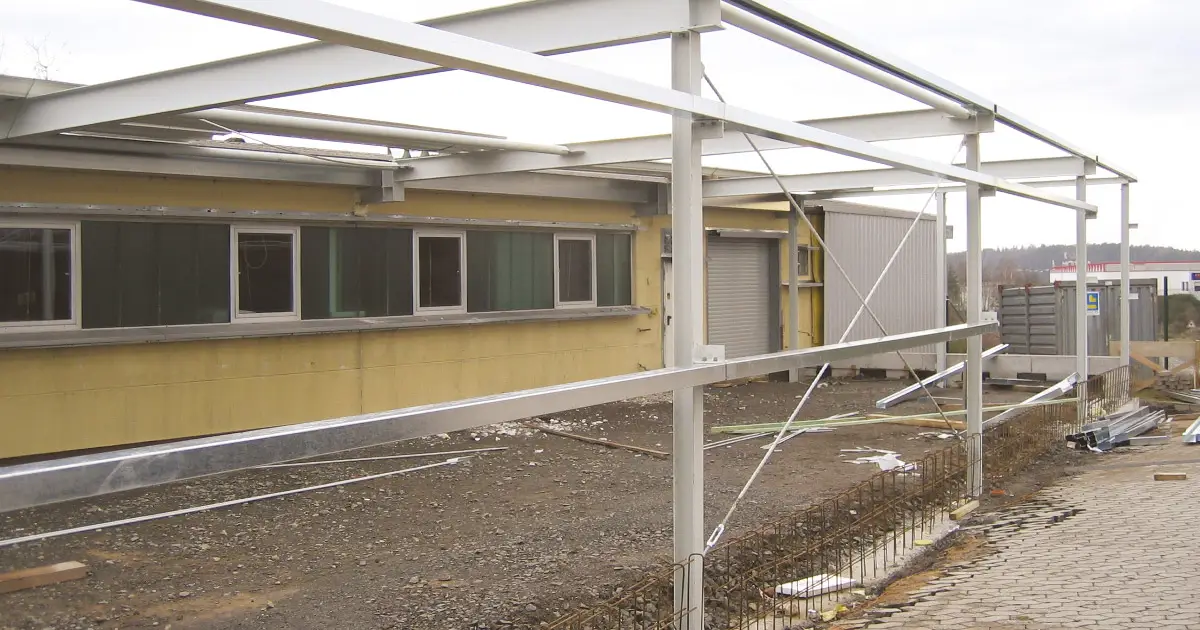
The existing offset printing line is replaced by a Heidelberg Speedmaster 8C 4/4. Thanks to automatic sheet perfecting and significantly reduced make-ready times, capacity in the 4/4-colour segment can be doubled. Together with a dedicated extension building for the new offset press, approximately €3 million is invested, increasing total production space to 1,800 m². The number of employees rises to 28 in Bexbach plus three additional staff at the subsidiary in Sarreguemines.
2000s
- Details
- Category: Company history
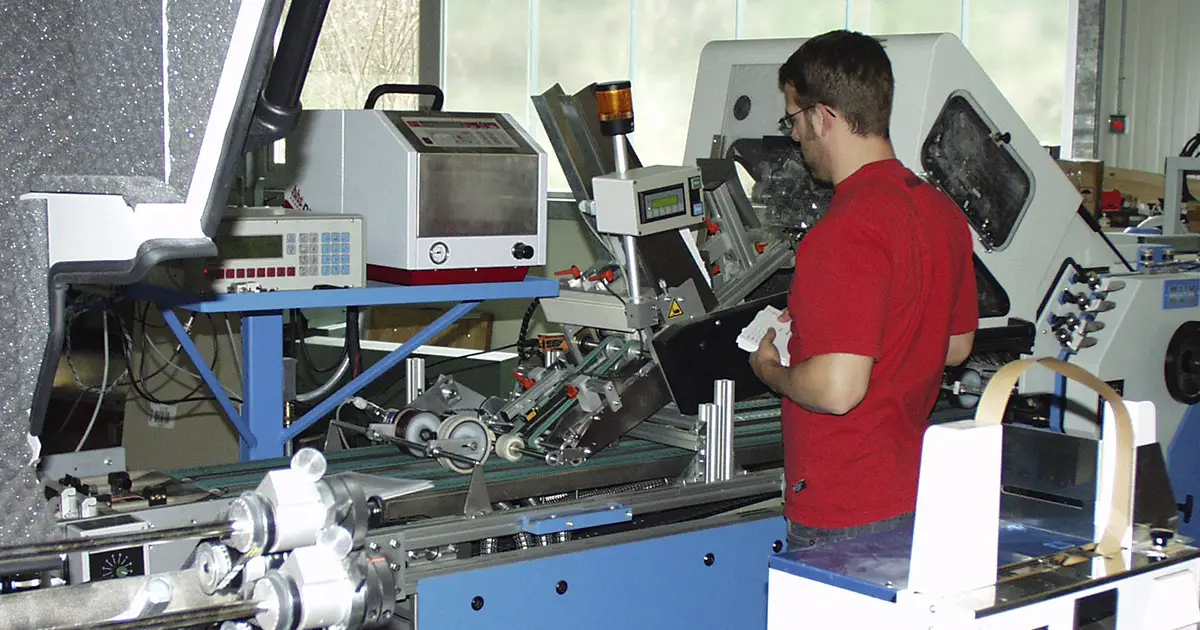
Between 2003 and 2005, mailing production is further expanded. Mailings are now produced using multiple inkjet personalisation units and two Pitney Bowes Post Star Vitesse inserting machines with four and six stations respectively. A custom-built mailing system enables inline folding, personalisation, application of response elements, gluing and perforation in a single process step, enabling efficient production of self-mailers. Annual output increases to more than 10 million mailings.
2002
- Details
- Category: Company history
The offset printing department is expanded with a Heidelberg Speedmaster SM 52 5C+LX. With this new press, finishing effects such as spot varnish can be produced. In addition, finishing processes such as inline die-cutting, perforation and creasing can be carried out directly in the printing pass.
2001
- Details
- Category: Company history
The acquisition of the print shop Litholaser SARL in Sarreguemines not only opens up a new market in neighbouring France, but also establishes large-format printing as an additional business segment, which has since become one of the core areas of production.
1999
- Details
- Category: Company history
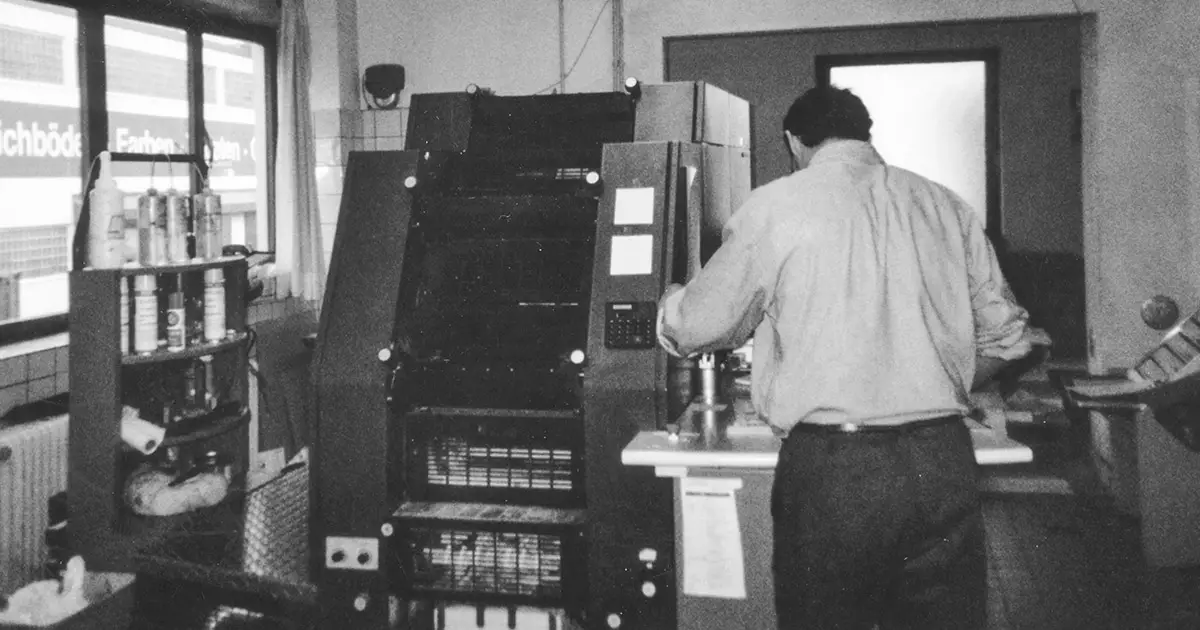
Due to the continuous expansion of the print shop, additional production capacity had to be created. In November 1999, the company therefore relocated to the industrial area “In der Kolling” in Bexbach, moving into a former suitcase factory with a production area of 1,400 m². With the upgrade from the Heidelberg MO 4C to a new Heidelberg SM 102 4C 2/2, the format change to 72 × 102 cm was introduced. In addition, a Heidelberg Quickmaster 46 2C and a GTO 46 1C were also in use in offset printing.
1996
- Details
- Category: Company history
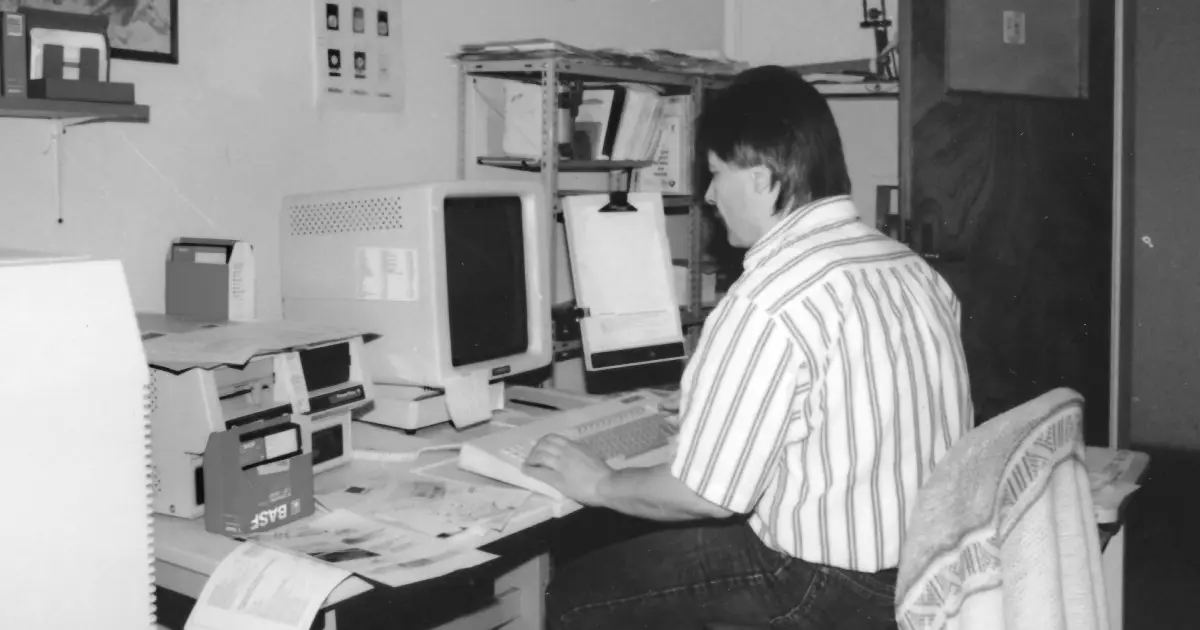
First experiences in digital printing were gained from 1996 onwards – one of the first Heidelberg Quickmaster DI systems in Germany was installed at Kern. Thanks to the computer-to-press process, printing plates could be laser-imaged directly within the press unit. This was later followed by an Agfa Chromapress.
1980s
- Details
- Category: Company history
The company was converted into today’s GmbH in 1983 following the takeover of the print shop by Jürgen Kern, son of Alois Kern. In 1985, his brother Joachim Kern also joined the management of the company.
The manual assembly of positive and negative films came to an end in the early 1980s with the installation of a computer-to-film (CtF) imagesetter. This system enabled full-page film output, which at that time was otherwise only possible in Saarland at the Saarbrücker Zeitung.
1979
- Details
- Category: Company history
The stationery shop with a printing workshop in the backyard is transforming into a dedicated printing business. The company is relocating from Wellesweiler Str. 12 to number 218.
While printing plate production was initially carried out using analog repro-photography and manual assembly, digital typesetting was introduced to the company in the late 1970s. With the Compugraphic EditWriter 7500 phototypesetting machine, it became possible for the first time to create entire layouts on a computer.
1970s
- Details
- Category: Company history
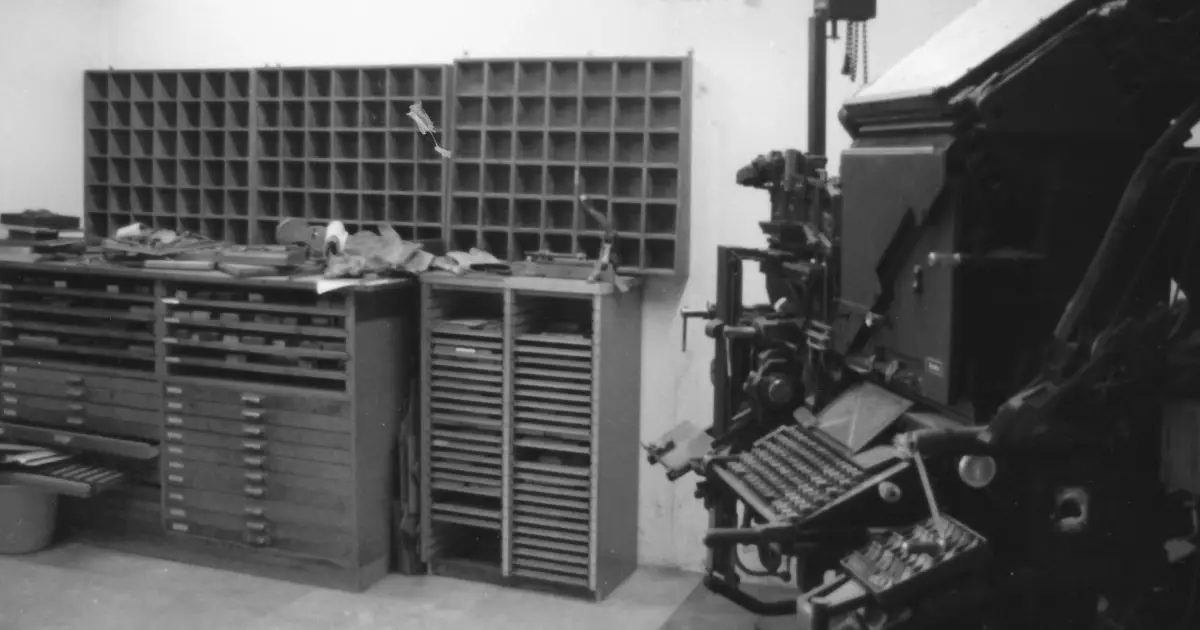
Printing originally used the letterpress process on Albert Frankenthal cylinder presses and Original Heidelberg platen presses (OHT) – initially with manual typesetting, later with Linotype machines for typesetting.
In the mid-1970s, the first technological shift took place with the transition to offset printing, using a Kord press in DIN A2 format and a single-colour Heidelberg GTO 46 (A3+ format).
This was followed by a two-colour Edelmann Praktika and two Heidelberg MO 2C presses, paving the way for four-colour printing in a single pass, which was ultimately achieved with the transition to a Heidelberg MO 4C in the 46 × 65 cm format.
Beine becomes Kern
- Details
- Category: Company history
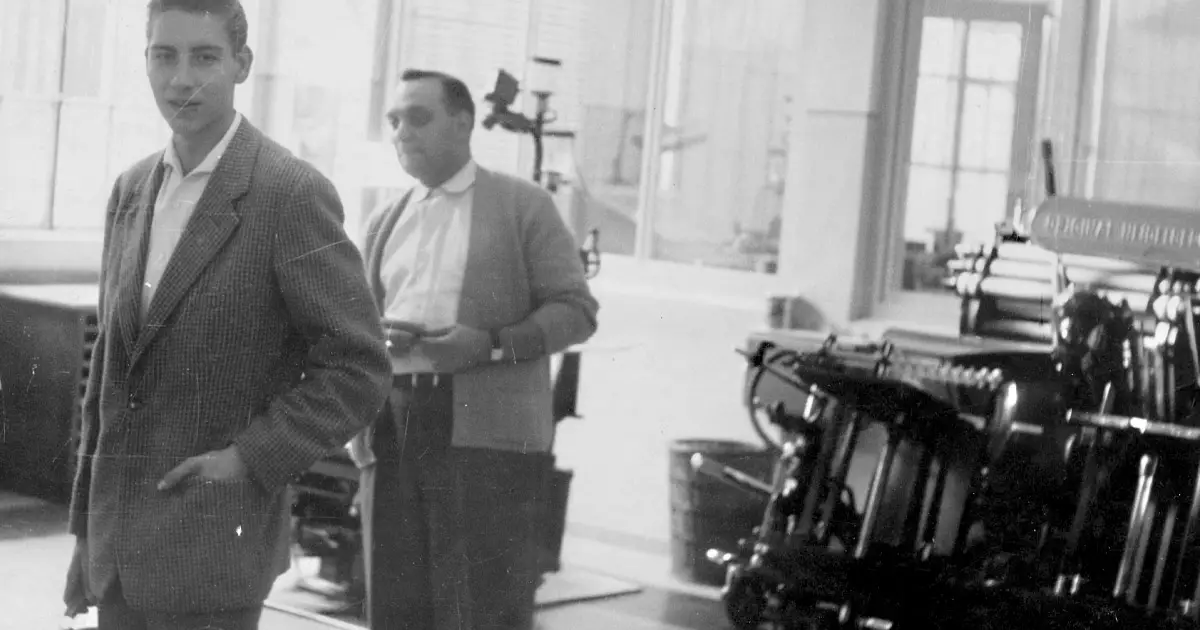
The name change takes place with the marriage of Hilde, daughter of Alfred Beine, to Alois Kern, which strengthens the family tradition in Neunkirchen and continues it successfully.
1911
- Details
- Category: Company history
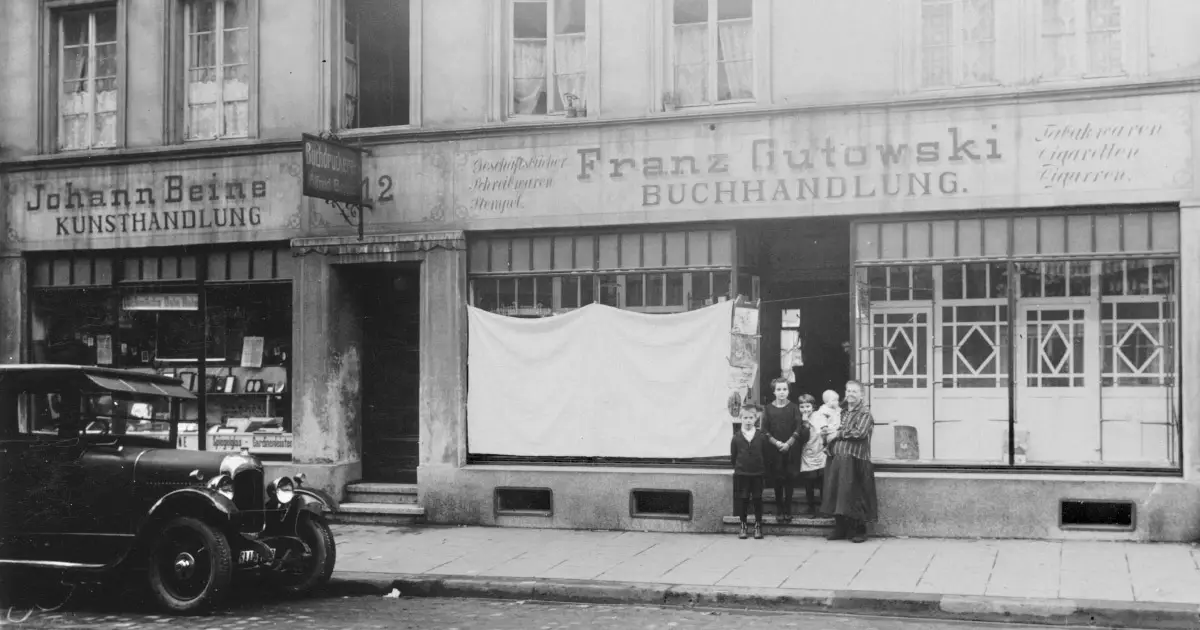
Alfred Beine continues his father’s business and expands it by adding a picture framing studio. The family later takes over the neighbouring bookshop and stationery store.
1897
- Details
- Category: Company history
Johann Beine takes over his father’s business and expands it by adding a letterpress facility.
1862
- Details
- Category: Company history
The foundation of today’s Kern printing company, based in Bexbach in the Saarland, was laid by Ludwig Beine in the second half of the 19th century. The Beine family originates from Warburg, North Rhine-Westphalia. In 1862, Ludwig Beine moved to the steel town of Neunkirchen and founded a bookshop with an attached manual bookbindery at 12 Wellesweiler Str.